




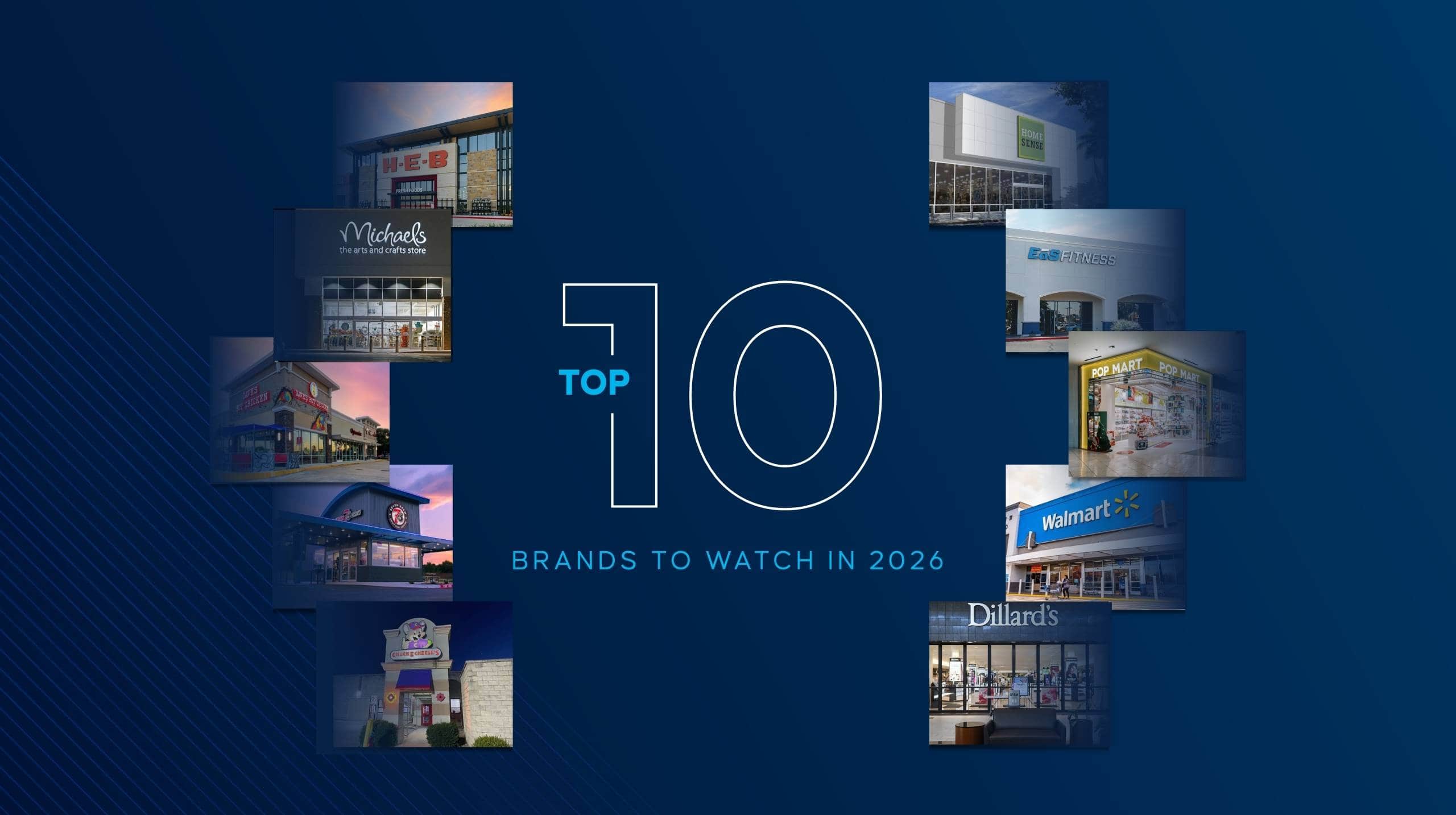
Retail demand in 2026 is not evenly distributed.
Traffic is concentrating around brands that align with clear structural shifts — loyalty, consolidation, convenience, value, and differentiation.
Placer.ai’s latest report highlights ten retailers gaining measurable momentum. While their categories vary, the drivers behind their performance follow consistent patterns.
Here is what the data signals.
1. Authenticity and Loyalty Increase Frequency and Spend
H-E-B continues to post steady year-over-year visit growth, supported by loyalty rates above the grocery average and revenue expansion through adjacent offerings like True Texas BBQ.
Chuck E. Cheese revitalized traffic through a low-cost subscription model, generating 8.3% YoY visit growth in 2025 despite location closures.
Signal: Brands that deepen loyalty and increase frequency create durable demand.
2. Consolidation Is Reallocating Share
Michaels’ visit share surged from roughly 32% to over 40% following the closures of key competitors. Growth accelerated through Q4 2025 as the retailer repositioned to retain displaced demand.
HomeGoods and Homesense also benefited from competitor bankruptcies while capturing value-focused refresh spending.
Signal: Consolidation does not automatically create winners. Execution determines who retains displaced traffic.
3. Strategic Positioning Preserves Stability
Dillard’s visits were essentially flat in 2025, yet the chain outperformed the broader department store category. Positioned between mid-tier and luxury, it continues refreshing product mix and attracting new segments without losing its core customer.
Signal: Disciplined positioning can sustain traffic in pressured categories.
4. Format Efficiency Is Reshaping Categories
Walmart saw traffic re-accelerate in Q4 2025 after a flat stretch earlier in the year, supported by integration between physical stores and digital fulfillment.
7 Brew is expanding rapidly with a double-drive-thru format built around speed and convenience — aligning with shorter dwell times and shifting coffee consumption patterns.
Signal: Throughput-driven formats and operational integration unlock growth at scale.
5. Value Positioning Supports Resilience
EōS Fitness outpaced premium gyms in 2025 with a high-value, low-price model and longer-than-average dwell times — increasing retention potential.
HomeGoods and Homesense captured demand from consumers opting for affordable home refresh projects rather than large remodels.
Signal: Accessible price points sustain discretionary traffic.
6. Differentiation Expands Trade Areas
POP MART experienced viral collectible-driven traffic surges, with trade areas widening significantly during peak demand periods.
Dave’s Hot Chicken scaled to 350+ units by combining category momentum with distinct brand positioning and urban-first expansion.
Signal: Distinct concepts can generate destination demand and expand geographic reach.
Retail’s Next Chapter
There is no single path to retail success in 2026.
Some brands are winning through authenticity and loyalty.
Others through consolidation and execution.
Others through convenience, value, or differentiation.
The common denominator is clarity of value proposition and disciplined execution.
Traffic momentum is concentrating around operators that understand their audience and design pricing, format, and product strategies accordingly.
In many cases, visit momentum appears before financial performance does — making retail traffic data a leading indicator of durability.
Source: Placer.ai
Be the first to know about new investment properties.
Subscribe to our mailing list